v3.0 · 2026-10-17
The Physique Progress Playbook
Make this week easier to follow.
01 / START HERE
Make this week easier to follow.
Choose one action, keep a simple record, and review it after seven days. Start here; use the other pages when you need them.
- Pick one useful action: follow your planned training sessions, prepare a repeatable meal, or keep a regular bedtime.
- Choose a matching record: sessions completed, days you prepared that meal, or nights you kept that bedtime.
- Write down when you will do it and what usually gets in the way. Review it next Sunday, or another day you choose.
At the review: Monday and Wednesday happened. Friday did not. Saturday did. Next week: keep three sessions and schedule the third for Saturday from the start.
A week helps you test the schedule and the habit. It is usually too short to judge changes in your physique. This is a practical coaching tool, not a scientific test of what caused your results.
02 / USE THIS WEEK
Your seven-day worksheet.
Print this page, copy it into your notes, or use the editable worksheet at dylanmelora.com/playbook#worksheet.
Day 7 review
- Entries stay in this tab unless you choose Save on this device. Saved entries remain in this browser only and are not sent anywhere.
- Use Restore saved copy before turning saving on if you want to continue an earlier saved week. Older worksheets remain untouched.
- A rest day is not a miss. A blank means you did not record it, not zero.
Pick one review outcome: keep the plan, watch it longer, or change one specific thing. Use the review examples on page 5 if you are unsure.
03 / TRAINING
Know when to add weight.
Here is one way to progress an exercise already in your plan. It is an example, not a complete training program.
- Use a rep range, such as 8-12. Pick a load you can lift with controlled, consistent technique.
- Keep the weight the same while you build reps. Log each working set.
- When every planned set reaches the top of the range with similar technique and effort, try a small increase. Your reps may drop toward the bottom.
| Session | Set 1 | Set 2 | Set 3 | Decision |
|---|---|---|---|---|
| 1 | 12 | 10 | 9 | Keep load |
| 2 | 12 | 11 | 10 | Keep load |
| 3 | 12 | 12 | 12 | Try small increase |
These invented numbers use the same exercise and load for all three sessions. You do not have to add reps every session. If the next jump is too large, keep the load and discuss another progression option.
If you are new to the movement, get help learning it first. Stop an exercise that causes pain and seek appropriate assessment.
04 / FOOD
Build two meals you can repeat.
Choose meals you like, can afford, and can make on a normal busy day. You can keep variety; these are dependable options, not a fixed diet.
- Start with a protein food you enjoy: eggs, yogurt, chicken, fish, tofu, or beans.
- Add foods that fit the meal: a grain or other carbohydrate, vegetables or fruit, and a source of fat as appropriate.
- Decide how you will buy and prepare it. A meal is only useful if you can actually make it.
Match food choices to allergies, preferences, and your needs. Portions depend on your goal and circumstances. This worksheet does not set calorie or protein targets for you.
05 / REVIEW
Choose the next useful step.
First ask: did I do what I planned? Then ask what the record actually shows. Look at your chosen action, the notes, and whether there is enough information to decide.
| What happened | A reasonable next step |
|---|---|
| The action fits and is happening | Keep it. Repeat the same plan. |
| It happened, but the result is still unclear | Watch it longer. Keep recording. |
| The same obstacle keeps stopping it | Change that obstacle or simplify the action. |
Bodyweight can fluctuate day to day. If weighing is useful for you, use consistent conditions and look at trends over time. You can choose a different measure if weighing makes things harder.
Changing one thing can make the next review easier. Safety and advice from a qualified professional come first.
06 / YOUR NEXT STEP
Use the guide. Get help if you want it.
You can keep using this worksheet on your own. If you want a plan built around you and someone to review the week with you, that is what my coaching adds.
- Your training plan: Exercises, sets, reps, and a way to progress, built around your goal, experience, schedule, and equipment.
- Practical food guidance: Nutrition targets and meal habits you can use with foods you like and a budget you can manage.
- A written weekly review: You send your check-in. I review your training, food habits, recovery, and what got in the way, then send written feedback.
- Clear next steps: Know what to repeat, what needs watching, and what we are changing, with the reason explained.
Messages are answered within two business days, Monday-Friday (Eastern).
Apply. I review your goals and situation. If coaching looks like a fit, I invite you to a 30-minute Fit Call. You review the scope, price, and written terms before paying. Onboarding follows enrollment. Applying is a fit check, not a commitment to buy.
Coaching is paid. Depending on the option, the initial term is 3 or 6 months. Monthly plans continue month-to-month after the initial commitment until canceled under the written terms.
See how coaching worksThese sources support general goal-setting, tracking, and gradual progression. They did not test this guide or guarantee outcomes. The examples and worksheet are coaching tools.
Training, nutrition habits, and recovery coaching for adults. Not medical care, injury rehabilitation, or medication, hormone, or peptide guidance. General education for healthy adults. Individual results vary. Seek qualified help for medical concerns or disordered eating.
My own progress — original scan record
Dylan’s personal InBody scan sheets, January 22 – September 2, 2026. Body-fat readings are device estimates, not client results or a promised timeline. The short v3 guide PDF does not include these records.
Open the original scan image at full size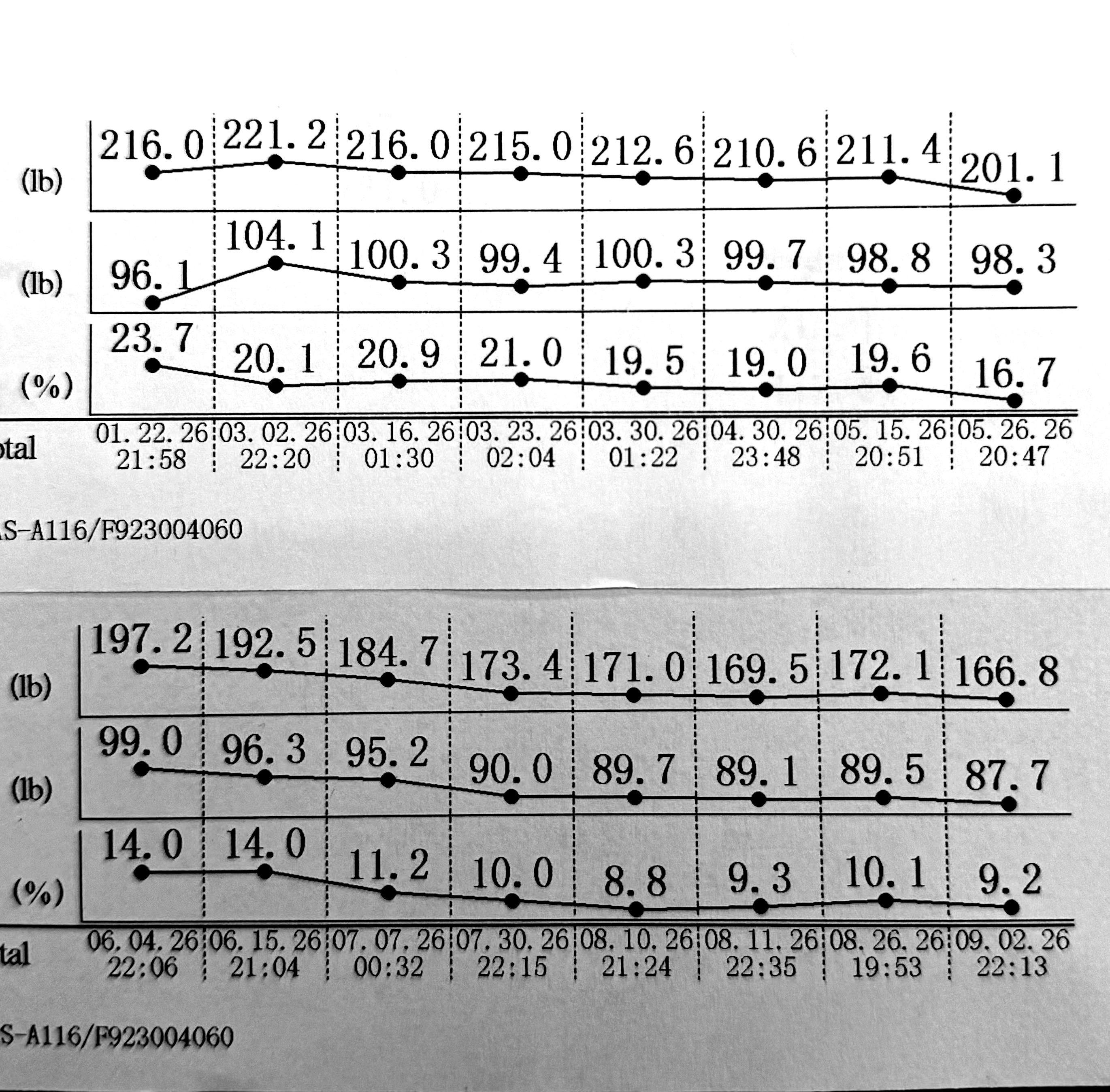
Personal history, not evidence that one diet or method caused every change. Individual results vary.